Saturday, July 30, 2016

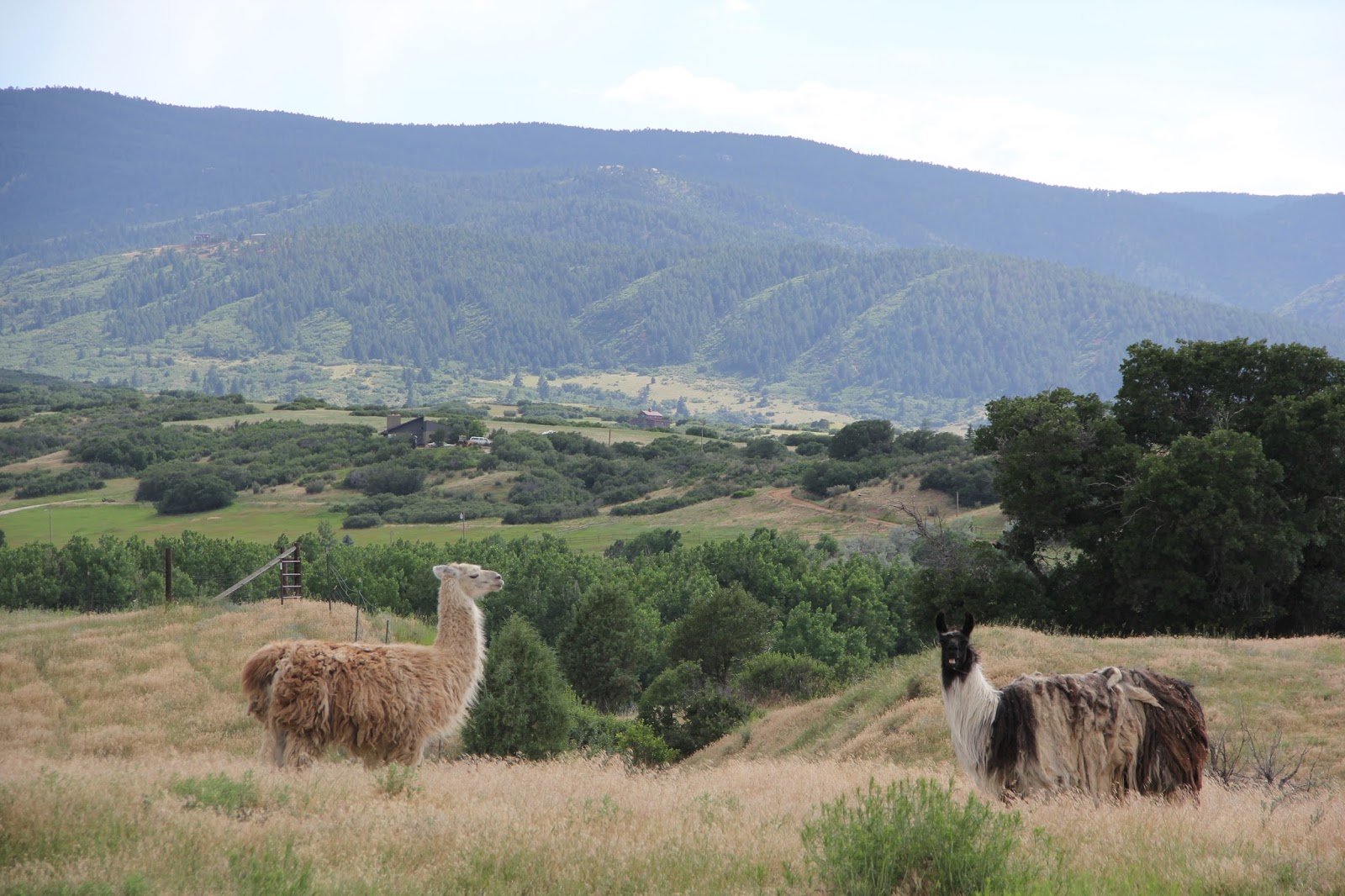
Proof that I can hit the broadside of a barn


Throwing rocks as small boy, neighbor kids had their fun,
Can't hit the broadside of barn, the chant went.
Might've been right, even inside, had trouble getting it done.
 
Time rolled along, the downhill, carried a camera, not a gun,
Tried to tell stories, document how the times spent. 
Looked for character, setting, plot, conflict, resolution. 
 
Lot of things go on, out at the farm, in the fields, under the sun,
Night, after sundown, it was like all lived in the same tent.  
Chores, milking, meetings, dances, smiles, experience by the ton.
  
Life goes along, under rafters, paint loosens, cracks in the long run. 
Photos we took, had stories their own, some just like we meant. 
On balance, broadside we hit, inside and out, no trouble, got it done. 
 
___ Rob Carrigan  
 

Sunday, July 3, 2016

Centennial State Lighting up the Fourth of July

O beautiful for spacious skies,
For amber waves of grain,
For purple mountain majesties
Above the fruited plain!”

__ Katharine Lee Bates

D. & R.G. Scenic Railroad Band in Monument


4th of July celebration, 1889 to 1900, Ouray

Crowds gather around the bunting-draped flagpole and grandstand on Main Street and Fifth (5th) Avenue, Ouray, Colorado; the Magnolia Band is in the center with parade floats on Main (Third, 3rd.) United States flags, streamers, and evergreens decorate the street for the Independence Day celebration. Shows a painted sign on the Hiebler building that reads: "Cabinet Club House" another advertises chewing tobacco., Western History/Genealogy Dept., Denver Public Library.


Group near Palmer Lake, July 4, 1893


Six children, three girls and three boys, pose in the brush on a hillside on Independence Day (July 4th), Palmer Lake, El Paso County, Colorado. The girls wear long, ruffled dresses and hats; the boys wear suits, bow ties, and hats.  Western History/Genealogy Dept., Denver Public Library.


Fourth of July festival, Victor, 1899
 

Bird's eye view of Fourth Street during 4th of July celebration, 1899, Victor, Colorado. Parade consists of horse-drawn wagons & floats marching underneath welcoming arch lettered with Florence & Cripple Creek and Golden Circle names; erected for 1899 festivities boasting 12 million dollars of production by mines in/around Victor. People crowd the boardwalks, businesses have awnings, a United States flag, and sign: "Mitchell's."  Western History/Genealogy Dept., Denver Public Library.

Cripple Creek, July 4 - 1893 


J. G. Wilson, photographer. Crowded street scene with people and horse-drawn wagons and carriages for Fourth (4th) of July celebration on Bennett Avenue, Cripple Creek, Colorado; spectators stand on second story porch of Palace Hotel; striped bunting and United States flags are on commercial buildings; men and women use umbrellas for shade.  Western History/Genealogy Dept., Denver Public Library.

Early Telluride, 1890 and 1895


Telluride Silver Cornet (?) Band parades west on Main Street (Colorado Avenue), Telluride, Colorado. Townspeople line street to watch Fourth of July parade. Businesses include: A. J. Vart, Merchant, two-story Sheridan commercial block, and buildings past First National Bank building. A dog walks with uniformed band with tubas, trombones, drum, horns and banner. Group of uniformed masons march behind band. A tall flagpole with inverted funnel shape platform shows in the middle of the street in background. Ajax, Ingram, and Telluride Peaks are in distance.  Western History/Genealogy Dept., Denver Public Library.

Dolores, Fourth of July, 1893


 Please click on following to read about early days of Dolores


Monday, October 19, 2015

Showing 'colour' in Fox Run Regional Park

"The phrase and the day and the scene harmonized in a chord. Words. Was it their colours? He allowed them to glow and fade, hue after hue: sunrise gold, the russet and green of apple orchards, azure of waves, the greyfringed fleece of clouds. No it was not their colours: it was the poise and balance of the period itself. Did he then love the rhythmic rise and fall of words better than their associations of legend and colour? Or was it that, being as weak of sight as he was shy of mind, he drew less pleasure from the reflection of the glowing sensible world through the prism of a language manycoloured and richly storied than from the contemplation of an inner world of individual emotions mirrored perfectly in a lucid supple periodic prose?”
― James Joyce, A Portrait of the Artist as a Young Man


Friday, October 2, 2015

Aspen Gold Rush: Colorado Quakies showing great color recently


Rob Carrigan,  rcarrigan61@msn.com

Local leaf peepers experienced some of the best shows — so far to date— this past week in Teller County, but it is still possible, the best is yet to come.
Color changes in Colorado’s Quaking Aspen (Populus tremuloides) start first in the higher altitudes of subalpine zones, between 9,000 and 11,000 feet, usually in early September, and drop progressively to 8,000 to 9,500 feet in three to four weeks.
Variations in temperature, moisture and light cause the chemical changes to begin. Diminished light and fall temperatures trigger the breakdown of chlorophyll.
As green colors fade, yellow, orange and red pigments — carotenoids and xanthophylls — are left and become more obvious.
Cool, dry weather promotes the longest and best color show and wet weather, especially snow, usually shortens the viewing period.

###


Saturday, May 30, 2015

Varying degrees of verbosity

-->


Running a newspaper 120 years ago was the kind of business that required varying degrees of verbosity -- depending mostly on how much advertisement the paper was able to sell.
And it was true also, that even the ads could become long-winded.
Consider the following item appearing in the Pikes Peak Journal of Feb. 16. 1895.
 ‘There is one department of industry, which, by the general admission of those engaged in it, is exempt from the stagnation which so largely prevails. Indeed it is in a remarkably flourishing state, and the men and women employed at it are kept busy from morning to night. It is that which deals with the supply of artificial sinews and muscles in order to give to limbs the plumpness and symmetry which nature has denied. The great demand at the present time is for well shaped calves for the legs, and for some time the purveyors of the embellishments could not make out why so many of them were wanted, because the requirements of the ladies of the ballet and burlesque actresses are pretty much the same all the year around, and there was nothing going on to occasion an unusual request for the articles.          
 “But they have now found out the reason. They are required by lady cyclists who wear knickerbockers, and who, naturally enough, desire to exhibit to mankind the limbs which are not covered by these bulky garments in as shapely and attractive a form as possible. The stuffing required for the purpose must be of the best kind, and it is also necessary that the mold should be well fitting; otherwise the lady cyclist would become a kind of scarecrow on wheels instead of a thing of beauty. The articles, therefore, cost more than the ordinary calves, and it may accordingly be said that the latest fashion among women not only encourages cycle making, but also aids the artistic upholstery of the human figure in the highest form.”
Similarly, the Auburn Daily Advertiser of New York in 1895,  noted an important Anniversary.
“This edition de luxe of the Advertiser is to commemorate the anniversary of its birth,” read the text.
“Fifty years of steady, upward growth in a newspaper plant is the certainly not the common lot of the craft embarked with us on the journalistic sea, but the Advertiser feels just as young as it used to be and indulges the hope of blossoming as a century plant fifty years hence in the new Auburn.”
It continues.
“Fifty years old! But stay gentle reader, it is not our purpose to inflict an endless array of dry historical data upon you, detailing each year’s achievements of the oldest and best newspaper in Central New York.”
But then, it goes on for several, large-format, newspaper pages doing just that.
But requirements for space varied wildly. A week later than the first reference in the local Pikes Peak Journal of 1895, the following entry was more straight-forward and to-the-point.
 “Ralph Aldrich, one of the carrier boys for the Journal was attacked Monday night on Ruxton Avenue by a pointer dog belonging to Henry Mueller, and badly bitten in the shoulder and side. The boy is the son Alderman Aldrich, and was delivering papers when attacked. Mr. Mueller took the boy to Dr. Oglibee, who dressed the wounds. The dog was shot.”
 ###